
Historic District Window Rules in Grand Rapids, Michigan
Grand Rapids has some of the best-preserved old housing in Michigan, and the city protects it. If your house sits in a local historic district, the windows are part of what the city reviews, and the rules are stricter than most homeowners expect. This guide explains which homes are covered, what the city's April 2026 guidelines say about windows, how the approval process works and what it costs.
Grand Rapids Window Pros is a free matching service, not a window company or a city office. Nothing here is legal advice, and no installer can approve a project for you. Confirm details with the city's Historic Preservation staff at 616-456-3451.
Which Grand Rapids homes fall under historic district rules
The city has designated six multi-resource historic districts and 79 individual landmarks since 1973. The residential districts most homeowners deal with include:
- Heritage Hill, designated in 1973 and described by the city as one of the largest historic districts in the nation
- Cherry Hill, in the East Hills area
- Fairmount Square, also in East Hills
- Wealthy Street
- Heartside, downtown
Review applies to every property inside a district, "regardless of whether the property is considered a contributing or non-contributing resource," and it covers exterior repairs and alterations. Not sure if you're in? Ask the city before you collect quotes. Holland has its own Historic District Commission and its own window guideline, covered below.
The core rule: repair comes first
The city's guidelines are direct. Replacement of a contributing window "will only be considered if repair is not feasible." The guidelines also say glazing, re-roping, fit, glass, paint and efficiency "are not cause for replacement." In other words, a drafty sash with a broken rope and cracked putty is a repair job in the city's eyes, not a reason for new windows.
The city also makes an energy argument: in its view, a weather-sealed historic window "with a storm window is just as energy efficient, if not more so, than a new insulated window." That is the city's claim, and it is the position your application will be judged against.
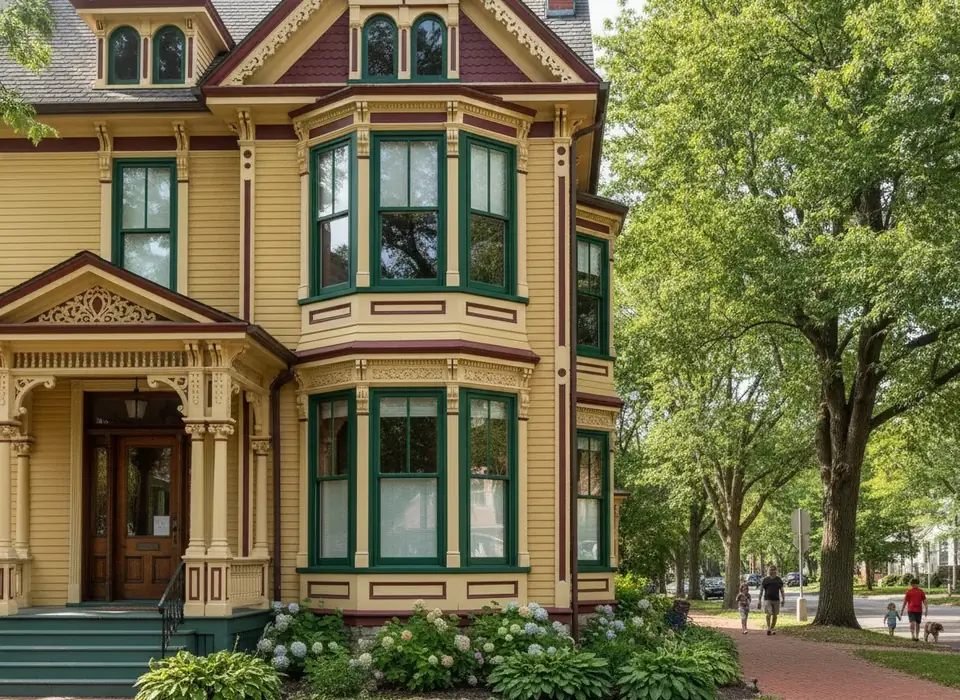
The free city window assessment
Before you apply, the city's Historic Preservation staff offer a free window assessment. They look at each window and tell you whether it can be repaired. If it can, the city expects repair. If a window is truly beyond repair (for example, a sash rotted through or a frame that has failed), that finding supports a replacement application. Book the assessment early, since it shapes everything that follows.
How the Certificate of Appropriateness process works
Window assessment
Staff review the condition of each window. Repairable windows stay and get repaired.
Application
Submit photos of every affected window and the specifications for any proposed replacement or storm window.
Review
If the windows are beyond repair and the replacement is in-kind, staff can usually review it. Anything else goes to the full Historic Preservation Commission.
| Track | Typical work | Typical timing | Fee |
|---|---|---|---|
| Staff review | In-kind repairs, storm doors and windows, in-kind replacement of windows found beyond repair | Typically one to two days | $27 |
| Full commission | Non-matching replacements, substitute materials, changes to openings | Upwards of two to four weeks (the commission meets monthly) | $92 |
A Certificate of Appropriateness is valid for 12 months, so plan the order and install inside that window.
What an approved replacement window must match
When replacement is approved, the new window must match the existing one "in all facets," including design, dimensions, pane configuration, muntins, glazing, glass, finish, location, operation and materials. A few specific rules trip people up:
- No fake grids. Snap-on muntins, interior-only muntins and grids that exist only between the glass are not permitted. Simulated divided lights need muntins on both the exterior and interior plus a spacer bar.
- Clear glass. Glass under 70% visible light transmittance, tinted glass and films are not permitted.
- Keep special glass. Leaded, stained or prismatic glass may not be removed.
- Material. Substitute materials may be considered when in-kind is not technically or economically feasible, mostly on secondary facades. The guidelines note vinyl has "little to no profile depth." Do not assume a vinyl insert will be approved on a historic house.
Storm windows: the easy approval
Wood or aluminum storm windows are "highly encouraged," and staff handle the review. To pass, they should be inset to the window stops, color-matched to the trim, and match the window's style. On a double-hung window, that means a double-hung storm with the meeting rails lined up. For many Heritage Hill owners, repair plus good storms is the fastest, cheapest path to a warmer house. The historic window repair and storm windows page explains how restoration specialists approach it.
Don't start without approval. Beginning exterior work without a Certificate of Appropriateness violates City Code Chapter 68. The city can issue a stop-work order or correction notice, require restoration, charge fees and pursue a misdemeanor complaint. An installer who says review "isn't needed" or can be worked around is a reason to keep looking.
Lead-safe work on historic windows
Almost every house in these districts predates 1978, and old window sash and trim are a common place to find lead paint. If your home was built before 1978, federal law requires the installer to be an EPA Lead-Safe Certified Firm (EPA runs this program in Michigan). That applies to repair work and replacement alike. Ask for the firm's certification and how they plan to contain dust.
Holland's historic districts
Holland runs its own Historic District Commission, and exterior work there also needs a Certificate of Appropriateness. Holland's guidelines prefer repair and say replacements "shall duplicate the appearance of the existing original windows in design, size, proportion, reflective qualities and profiles." They add that steel, vinyl, aluminum and fiberglass "seldom match the appearance of wood." Call Holland's planning staff at (616) 355-1330 before you plan replacement. More on the lakeshore market is on the Holland page.
Hiring for a historic-district window project
- Ask whether the company has worked through a Grand Rapids Certificate of Appropriateness before, and who prepares the application.
- Ask for repair pricing, not only replacement pricing.
- For approved replacements, get the exact product, profile and grid type in writing so it matches what the city approved.
- Check the Michigan license on LARA's lookup and confirm EPA lead-safe firm certification.
Outside the districts, the choice between repair and replacement is yours. Our guide to repairing or replacing old wood windows helps you weigh it, and the wood and fiberglass windows page covers in-kind options. Ready to talk to someone? Request free quotes and mention your district, or call (616) 616-5192.
Frequently asked questions
Do I need permission to replace windows in Heritage Hill?
Yes. Every property in a Grand Rapids local historic district needs a Certificate of Appropriateness before exterior window work starts, whether the house is contributing or not. The city requires repair first and offers a free window assessment by its Historic Preservation staff.
Are vinyl windows allowed in Grand Rapids historic districts?
Don't plan on it. The city's guidelines require in-kind replacement that matches the original material and profile, and they describe vinyl as having little to no profile depth. Substitute materials are considered case by case, mainly where in-kind is not feasible or on secondary facades.
How much does a Certificate of Appropriateness cost in Grand Rapids?
Under the city's fiscal 2027 fee schedule, a staff-level review costs $27 and a basic review by the full Historic Preservation Commission costs $92. Staff reviews typically take one to two days; commission reviews can take two to four weeks.
Can I add storm windows to a historic house without full commission review?
Wood or aluminum storm windows are highly encouraged and are reviewed by Historic Preservation staff. They should be inset to the stops, color-matched and match the window style, with meeting rails aligned on double-hung windows.